
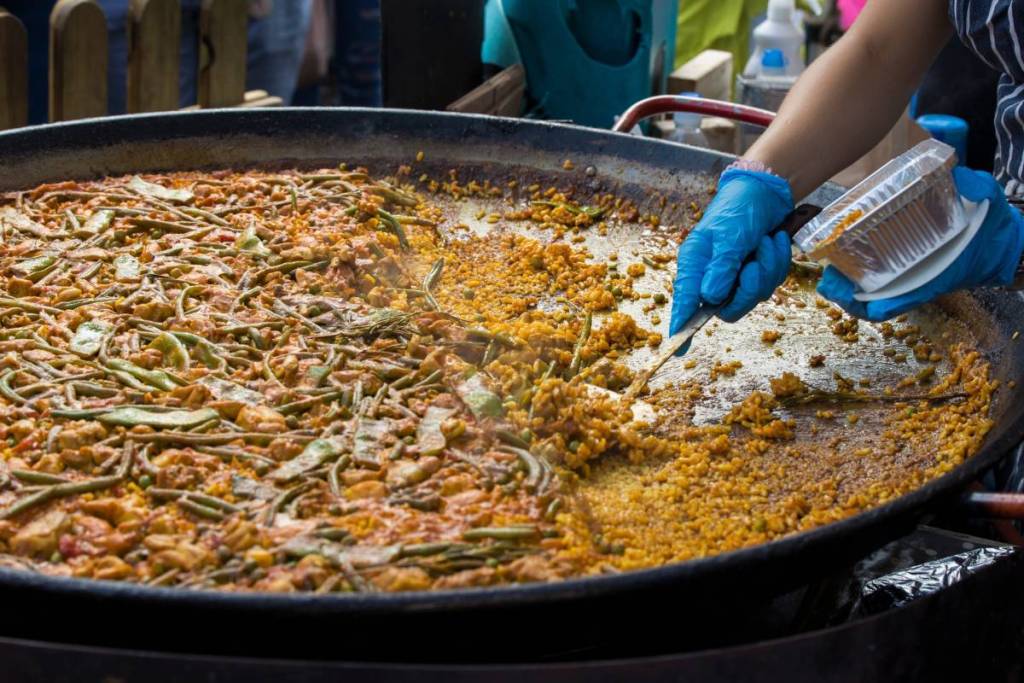

Eating paella is, in a way, like playing a “scratch-off” game—and not just because whether it turns out well or not often depends on sheer luck, but because the real treasure appears when you dig down to the bottom of the paella pan: the socarrat.
What most people don’t know is that the process by which this treasure forms is the result of a chemical phenomenon known as the Maillard reaction. To put it simply: when there’s no more broth left at the bottom, the metal’s temperature rises above 140 °C; that’s when the oil caramelizes the sugars in the rice (the starch) and the proteins it has absorbed from the meat and broth, creating a process similar to caramelization that gives us that crispy, toasted, and—above all—flavorful crust.
We don’t need to explain the aromas and nuances released by a good socarrat, nor how difficult it is to find the exact moment for it to caramelize without burning. Most master rice cooks agree that the trick is to turn the heat up to maximum for the last 30 to 60 seconds and, once it has “sizzled” enough, place the bottom of the paella pan on a damp cloth to stop the cooking process.
The socarrat and its impact on our health

However, just because something tastes good doesn’t mean it’s healthy (often the opposite is true), and several studies show that this is also the case with socarrat. The Maillard reaction itself produces chemical compounds that are not recommended for the human body, especially acrylamide.
Acrylamide is a toxic and potentially carcinogenic compound regulated by the European Food Safety Authority (EFSA) and, since 2018, by the Ministry of Health. This substance is not found only in socarrat, but also in other very crispy foods or those exposed directly to heat, such as toast or French fries.
Does this mean we should stop scraping the bottom of the paella and just enjoy the socarrat? Not necessarily. In fact, rice contains far less asparagine (the amino acid that produces acrylamide) than other carbohydrate-rich foods. The recommendation is to consume it in moderation and avoid continuous exposure to foods that may contain this chemical.
