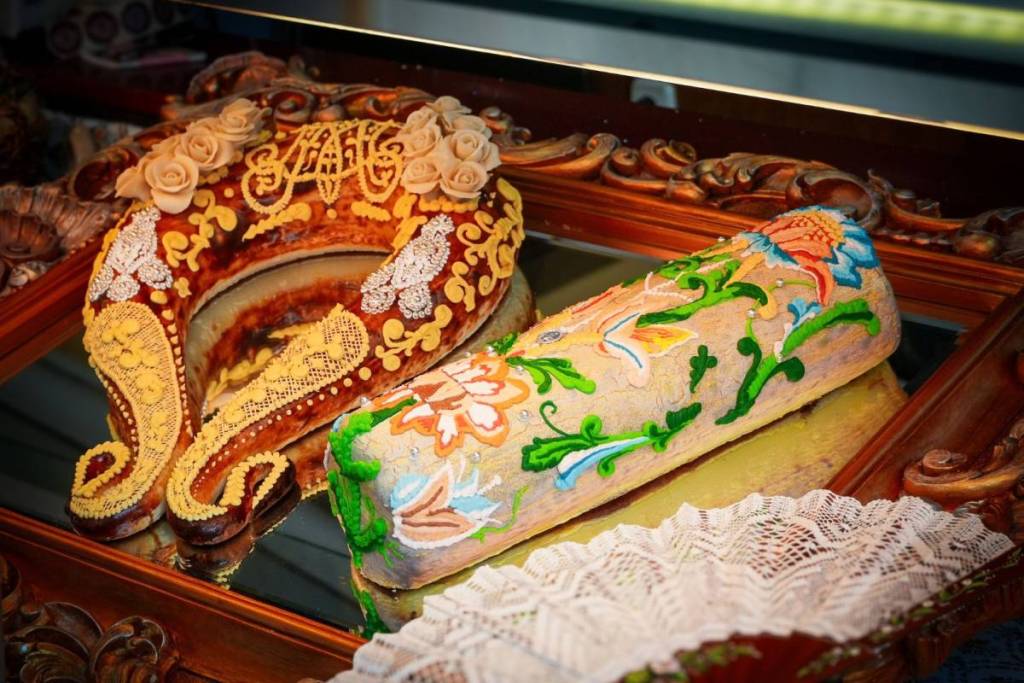

October 9 smells of two things: gunpowder and marzipan. The first is the work of master pyrotechnicians, and the second comes from the many high-quality bakeries and pastry shops we have in Valencia. But this year, out of all of them, the one that took home the prize for best mocaorà in the 2026 Sant Donís Contest was Pastelería Aixa, from Puçol.
The winning piece, created by Eliseo Valls Aixa, is dedicated to and reinterprets in marzipan several of the most recognizable elements of the Mare de Déu dels Desemparats—especially her mantle, depicted on the tronador. Reproducing it took more than two hours just to adjust the color of the base. The piece combines more than 20 colors and up to 30 layers of airbrush paint —including whites, ochres, and golds—to mimic the texture and roughness of the fabric. The tronador and the piula each required more than 20 hours of work.
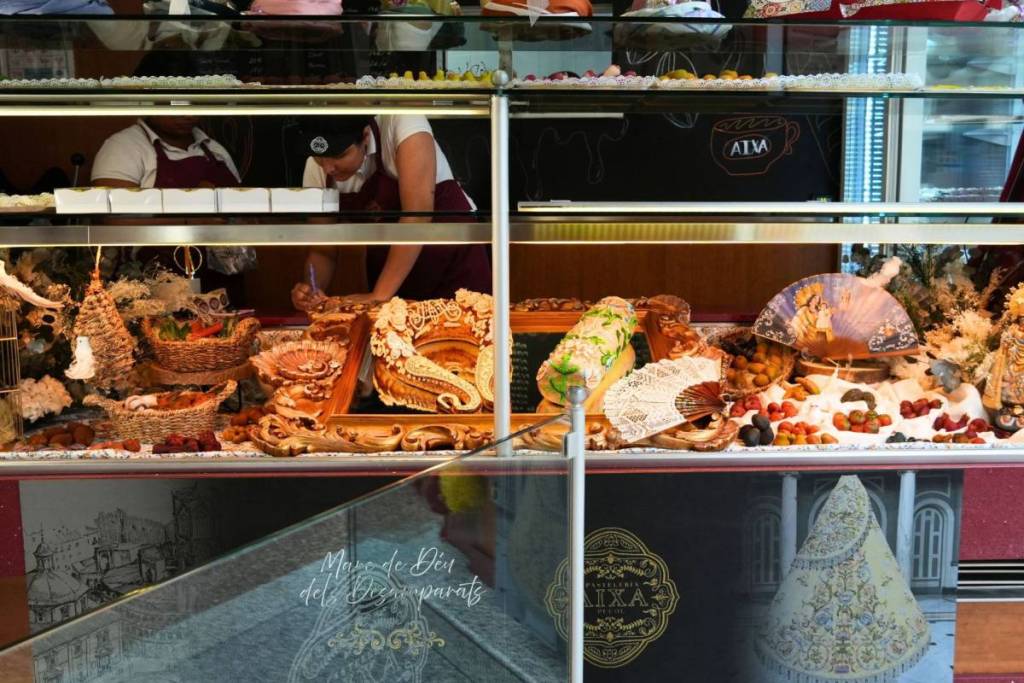
The piula features the anagram of the Hail Mary, with the intertwined initials A and M, and a crown of twelve stars. Also featured are the girándolas—the traditional earrings from the Virgin’s trousseau—and white flowers symbolizing the offering to the patron saint of Valencia. The display window, which also won the award for best in this edition, extends this presentation beyond the marzipan, with a setting rooted in Valencian tradition and heritage.
Sant Donís Contest: 7 awards and more than 45 years of history
David Esteve Pastisseria took second place in both Best Mocaorà and Best Storefront with a creation dedicated to the Valencia City Council. He recreated the Crystal Hall in marzipan—complete with its chandeliers, floors, and frescoes of angels—and rounded out the display with a storefront that recreates the old City Hall square and its flower stalls. Rounding out the podium for Best Mocaorà is David Pana, and for Best Storefront, Terra de Pa.
Pastelería Soler took home the award for best commercial piece, a category that recognizes marzipan fruit sold to the public. The judges focused on flavor, texture, and finish—and on ensuring that what the customer sees on the counter is exactly what they take home.
Terra de Pa has won the award for best innovation. Their marzipan replaces almonds with walnuts and adds tonka bean, a spice with notes of bitter almond, vanilla, and a hint of caramel.
Finally, Dulces Martín took home the prize for best tasting. The jury praised the well-baked piulas and tronadors, the balanced fillings, and the tender fruit marzipans, with just the right amount of sugar.
With more than 45 years of history, the Sant Donís Contest is the oldest of its kind in the Valencian Community. Only pastry shops bearing the Guild’s artisan quality seal—endorsed by the Valencian Community Center for Crafts—are eligible to enter. But the tradition of the mocaorà is much older and originated from a ban.
According to legend, in 1238 the Valencians entertained James I, Saint Violant of Hungary, and their soldiers with fruits and vegetables from the Huerta. The custom continued in subsequent celebrations, with piulas and tronadors thrown from terraces and windows. In the early 18th century, Philip V banned these celebrations through the Nueva Planta Decrees , but Valencian confectioners saved them by using marzipan: fruits, vegetables, piulas, and tronadors—so that October 9 would not be without its festival.