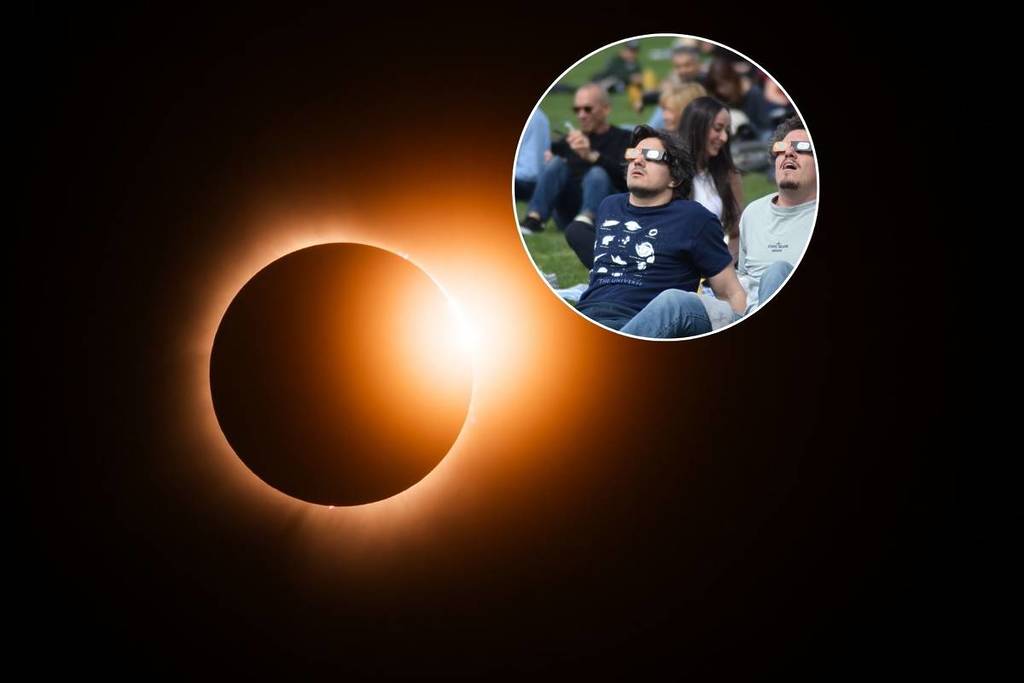
The city of Valencia will be one of the best places to observe the total solar eclipse on August 12, 2026. This astronomical event has not occurred as a total eclipse on the Iberian Peninsula since 1905 and 1912. The Moon will completely cover the Sun’s disk, causing a sudden dimming of natural light during the day in the middle of August.
Galicia will be the first region in Spain to see the shadow, which will then cross the country toward the southeast.
What time will the total solar eclipse be visible in Valencia in 2026
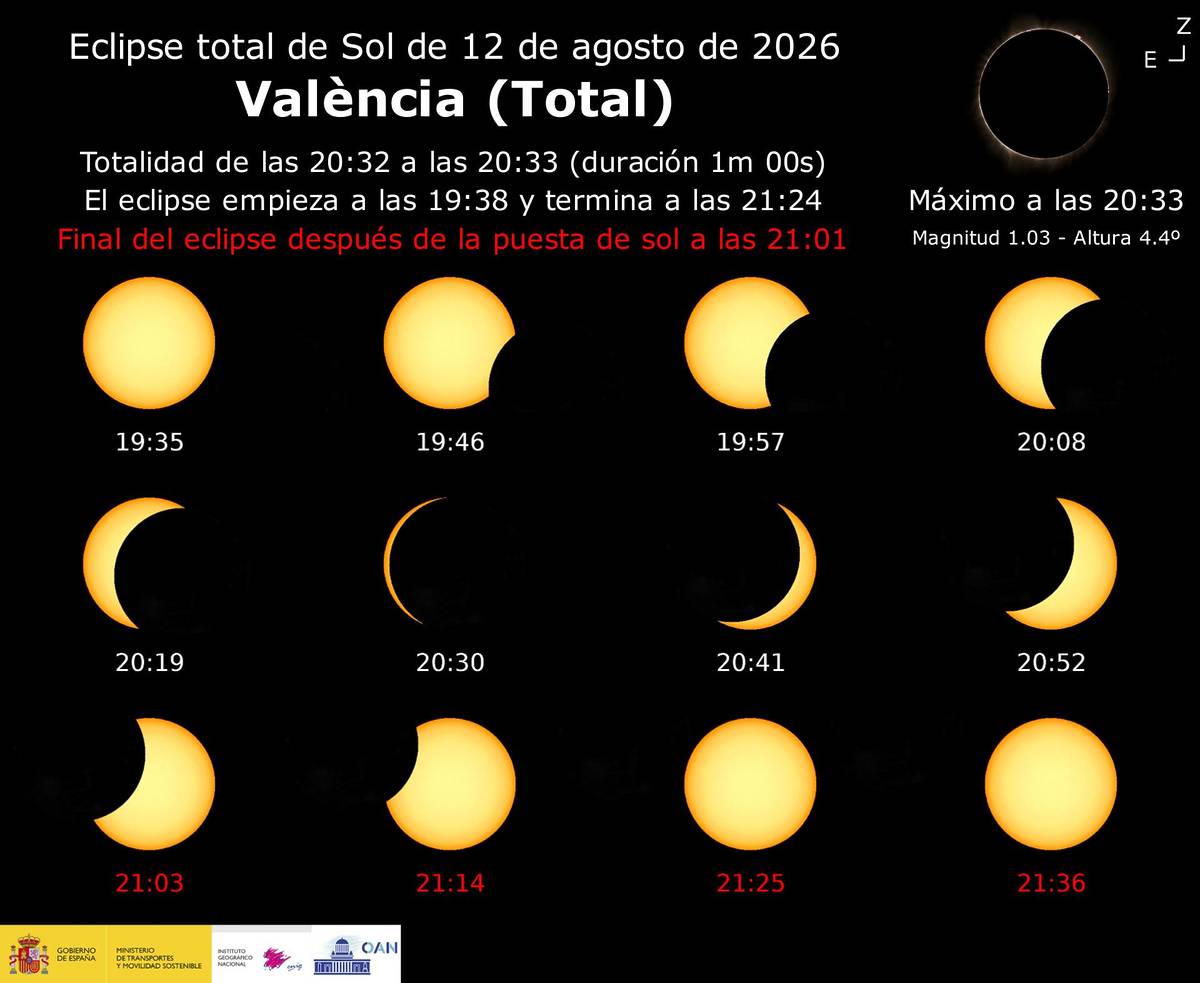 Total Solar Eclipse in Valencia in 2026
According to data provided by the National Geographic Institute (IGN), the event will begin in the Valencian capital at 7:38 p.m. The totality phase, when the sun is fully obscured, will occur between 8:32 p.m. and 8:33 p.m. The peak of visibility will be at 8:33 p.m., with the sun at an altitude of 4.4 degrees above the horizon.
The phenomenon has a unique feature in the province of Valencia: the eclipse will end after sunset. Sunset is scheduled for 9:01 p.m., while the Moon’s final contact with the solar disk will end at 9:24 p.m.
Experts warn of the need to use certified protective glasses to avoid eye damage during the partial phases. Viewing should be done slowly and intermittently.
Following the eclipses of the early 20th century, Spain will have another similar opportunity in 2027, though that time it will be visible mainly in Andalusia and Ceuta. An annular solar eclipse is also expected in 2028.
The IGN has set up a dedicated website where you can check the exact start and end times for each municipality. The magnitude of the eclipse in Valencia will be 1.03, a figure that confirms the complete occultation of the sun at this location.
The mistake that could ruin the solar eclipse in Valencia in 2026
 Photo: Shutterstock
On April 28, the date when the sun will occupy the exact same position in the sky as it will during the August 12 eclipse, you’ll need to head to your chosen viewing location and keep an eye on the sun’s path between 7:00 p.m. and 9:00 p.m.
If no urban or natural features interfere with the view of the sunset during that time frame, the location will be safe and ideal for enjoying the eclipse in August. Here we explain in more detail why you should do this.
Activities at the Ciutat de les Arts
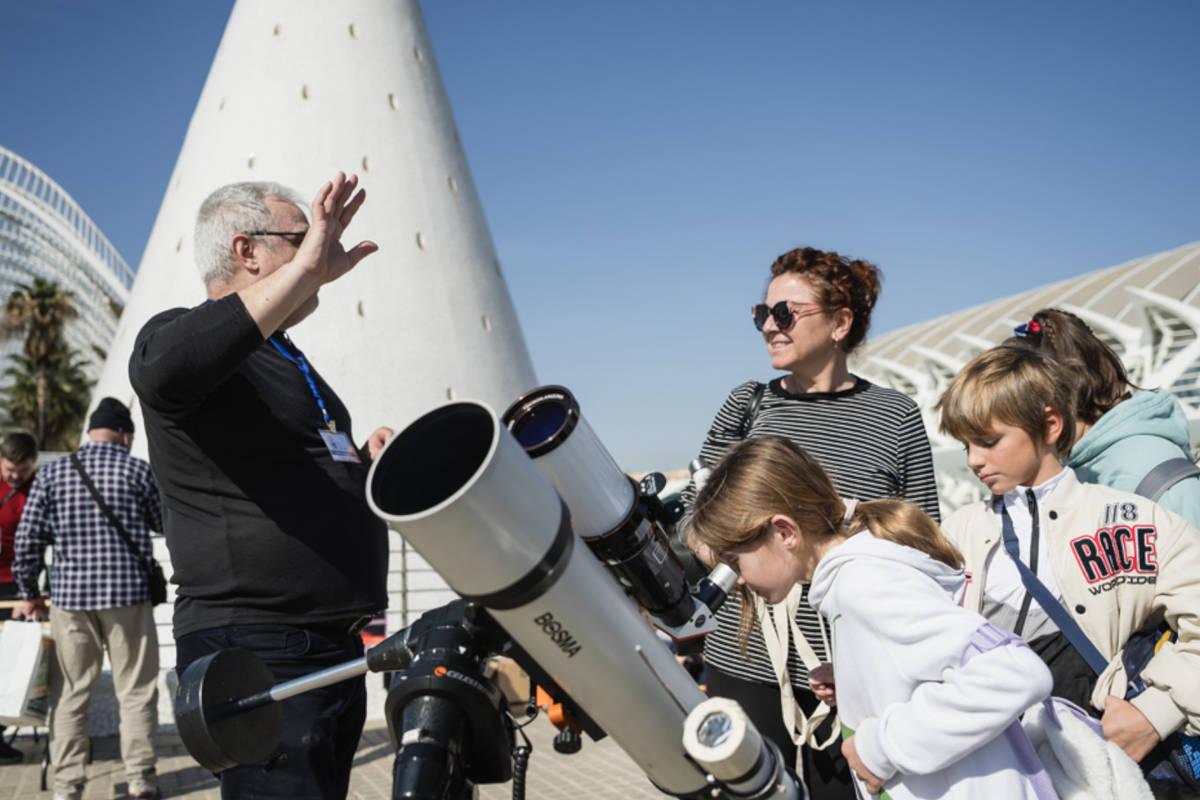 Photo courtesy of GVA
The City of Arts and Sciences has designed an outreach program leading up to the total solar eclipse on August 12, 2026.
The program will begin on April 28 with the immersive film ‘Eclipse: The Moment of Totality’ and a lecture by the European Space Agency (ESA), led by Pedro García Lario.
On July 21, there will be a free daytime observation session with telescopes in the Umbracle Astronomy Garden. The event will be complemented by a presentation by Nacho Pérez, coordinator of the Galáctica Astronomical Center in Teruel, at the Museu de les Ciències.
In addition, over the coming months, the Hemisfèric will screen ‘Eclipse. The Moment of Totality,’ a documentary that explains the origin of solar and lunar eclipses using real images and computer-generated graphics.
Each session will also include the short film ‘The Incredible Sun,’ a short featuring real images from NASA’s Solar Dynamics Observatory (SDO) mission to showcase the sun’s activity, such as flares and coronal mass ejections.