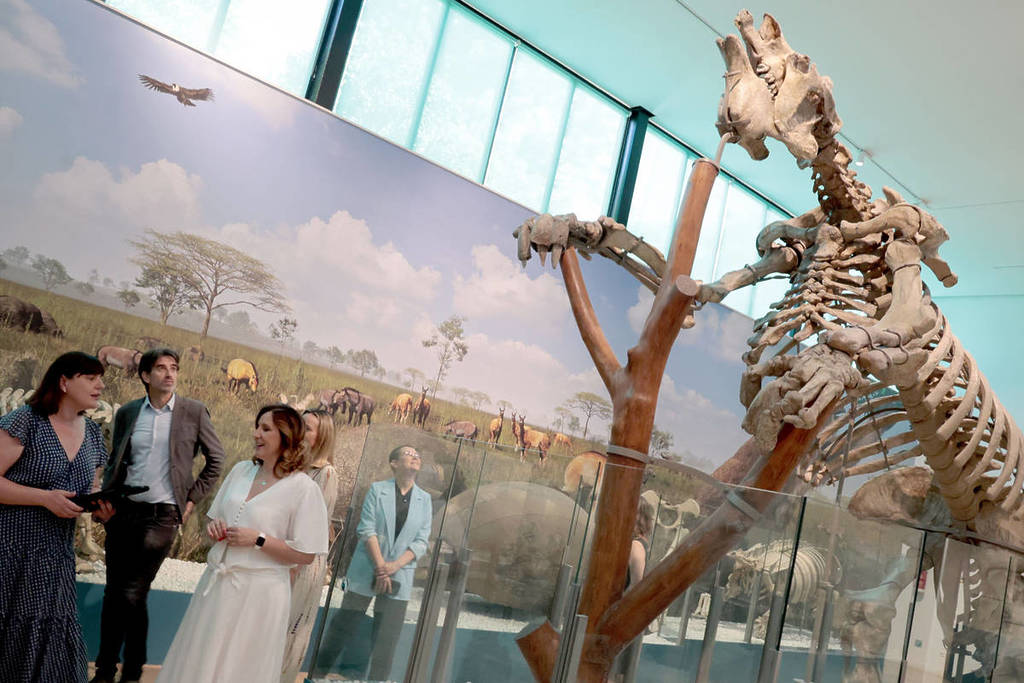
The Museum of Natural Sciences of Valencia, will begin a new phase from July 29. The center located in the Viveros Gardens will reopen completely remodeled and with a new name, “El Paleontològic – Museu de Col-leccions Naturals”.
A change that is not only aesthetic: the center will have a new museographic route, graphic image, technological resources and even a visual icon, the megatherium of its collection, as an emblem of this new era.
The new Paleontològic experience
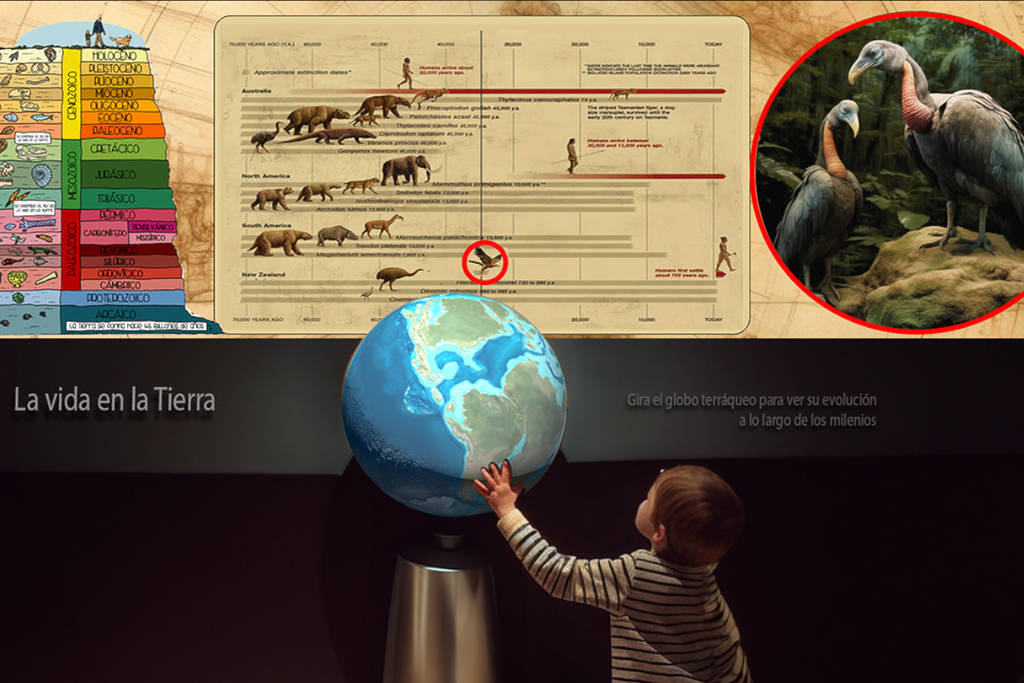
The transformation, financed with European funds from the Next Generation program, will include augmented reality, 3D cinema, audiovisuals, models, touch screens, permanent interactive installations and a personalized app to accompany the visitor throughout the tour.
All this is part of a new museographic approach that is committed to scientific dissemination adapted to the technological habits of the present, details the consistory in a statement.
The new experience of El Paleontològic is designed to be accessible, inclusive and participatory, with three itineraries adapted to different visitor profiles.
What you can see in the museum
The tour will allow you to interact with pieces and content through your cell phone. Some of the installations are The history of planet Earth, The cave of the hands and two tactile maps to explore paleontological sites and the malacology collection.
Each visitor will become an explorer thanks to a dynamic and personalized experience.
New 3D films, audiovisual materials and an app that transforms the cell phone into a personal guide have also been created. The goal, according to project director Julio Abad, is “a technological transformation of the museum, with a clearer and cleaner image, and to reach a wider audience. We all have a cell phone and now we can all interact”.
The museum, with 136 years of history, is one of the oldest and most visited in Valencia. Its origins date back to the 19th century, with Rodrigo Botet’s collection of fossils, one of the most important sets of South American Pleistocene fauna in Europe.
Today, the center conserves more than 5,000 fossil pieces, with about twenty complete skeletons, as well as valuable collections of malacology, entomology and botany.
The third most visited municipal museum
In 2024, the center received 77,042 visitors, making it the third most visited municipal museum behind the Museu Històric Municipal and l’Almoina.
But the transformation does not end in July. The museum is already working on a second phase with a new website, a renewed educational program, a plan for virtual visits and inclusive content to further expand its scope and pedagogical vocation.