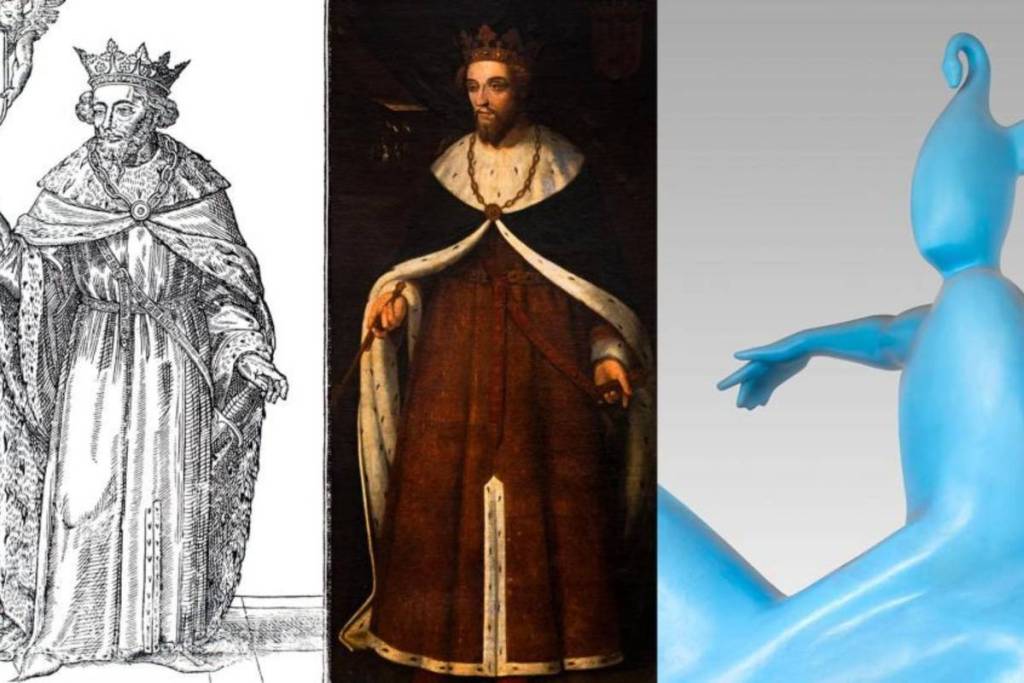

Jaume I was not just another king for Valencia: the memory of the conquest, the founding of the Kingdom of Valencia, and the recognition of an identity that endures nearly 800 years later have made him the most important figure in the history of this region. And on the 750th anniversary of his death, the Museu d’Història de Valencia is opening“The Image of King Jaume I: From Monarch to Postmodern Symbol,” an exhibition that explores his legacy and how his image has been shaped throughout the ages.
The exhibition opens to the public today, October 14, to reveal lesser-known aspects of the king, reflect on how the concept of royalty has evolved, and highlight the importance of the charters in the history of the Kingdom of Valencia’s establishment. Admission costs two euros for the general public, and the exhibition will run through February 7, 2027.
Three Eras, Three Perspectives
The exhibition is divided into three periods: the era of the Forals, from the 13th to the 18th century; the Renaixença, which in the exhibition extends through the 1960s; and the present day.
Among the pieces from the period of the City Charter are seals, parchments, and books from the Cathedral of Valencia. Of particular note is the *Liber Instrumentorum Omnium Episcopi Et Ecclesie Valentine* (1420), a codex compiling the privileges granted by various kings to the bishop and the cathedral. Also on display are four seals of the monarch, three parchments issued by him, and the *Aureum Opus Privilegiorum*, compiled by Lluís Alanya and printed by Diego de Gumiel in Valencia in 1515, which compiles the privileges granted to the city and the Kingdom.
The Renaixença is depicted through photographs of the sculptural projects that Valencian towns and cities commissioned in homage to the king. The image is based on the late 19th-century sculpture by Agapit Vallmitjana, which presides over the Parterre in Valencia. The exhibition includes the sketches and initial designs for that work, from the Arxiu Històric Municipal de Valencia, as well as materials from the Serrano Morales Library.
In the contemporary section, the exhibition recalls that in 2006, twenty-five illustrators reinterpreted the monarch. Representing all these versions, works by Sento Llobell and Manuel Martín are on display. Philately and children’s toys, such as Playmobil, round out the retrospective.