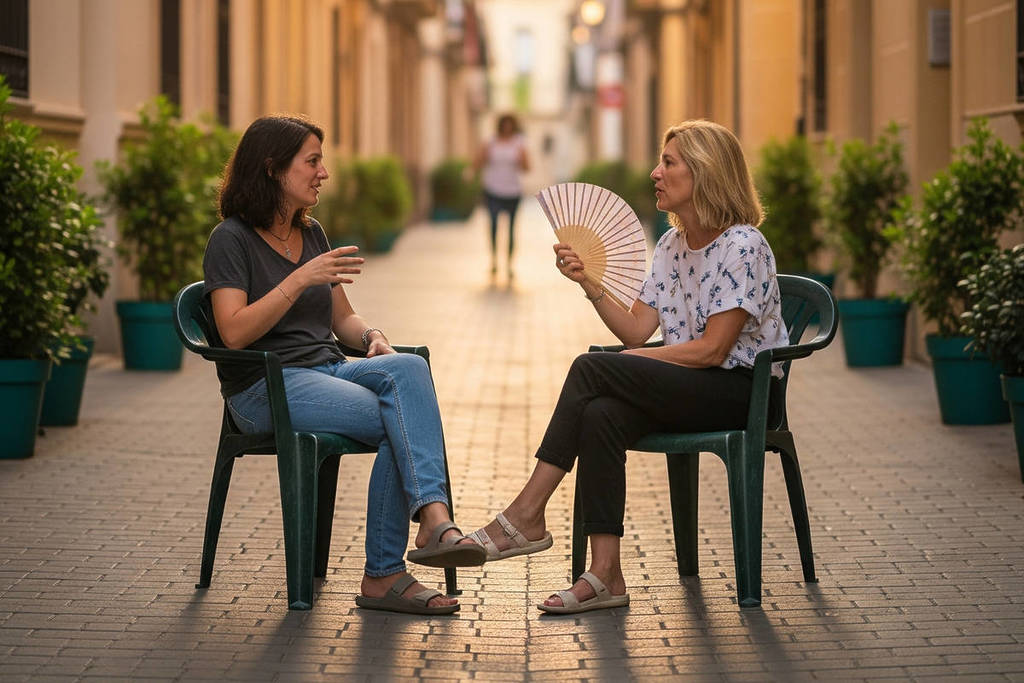
It is a very common sight in towns of the Comunitat Valencian during the summer: neighbors who discuss sitting on a chair in front of the door of his house. In fact, “sentarse a la fresca” has been proposed to be recognized as Intangible Heritage of Humanity by UNESCO. But is this practice legal in Valencia?
A few days ago, in Santa Fe (Granada), the Local Police posted on social networks a warning reminding that the street is a “regulated common space” and that, although taking the fresh air is a tradition, tables or chairs could be removed if they hinder the passage or if there are noisy meetings.

The measure unleashed a wave of criticism in networks. Mayor Juan Cobo clarified that “nothing is to be prohibited” and the Police clarified that it was only a preventive warning. They insisted: “Taking the fresco is not prohibited by any municipal ordinance”.
Is it possible to “tomar la fresca” in Valencia?

In the particular case of the city of Valencia, although no ordinance expressly mentions “tomar la fresca”, there are several municipal regulations that directly or indirectly affect this practice, especially if it is done on the sidewalk or on the public road.
The 2015 Ordinance Regulating the Occupation of the Municipal Public Domain does not expressly mention this tradition, as do other Valencian ordinances such as that of the City Council of Cullera.
However, it does establish that any occupation of public space (even with private furniture, such as chairs) requires authorization if it involves a private use, even if temporary.
This rule applies mainly to hotel and catering establishments and the installation of terraces. A chair in the street, if it impedes the passage or is placed repeatedly, can be considered an occupation without permission.
The Local Police can evict and sanction if it detects occupations that interfere with mobility or public use, which in this case if considered could carry penalties of up to 750 € as a minor infraction.
On the other hand, the Ordinance against Noise Pollution of Valencia (art. 41) prohibits shouting, shouting or raising the voice from 22:00 to 08:00 hours (9:30 on Saturday and eve of holiday).
Therefore, although sitting quietly is not prohibited, making noise or playing music may be punishable, even from inside the house if it is projected onto the public highway.
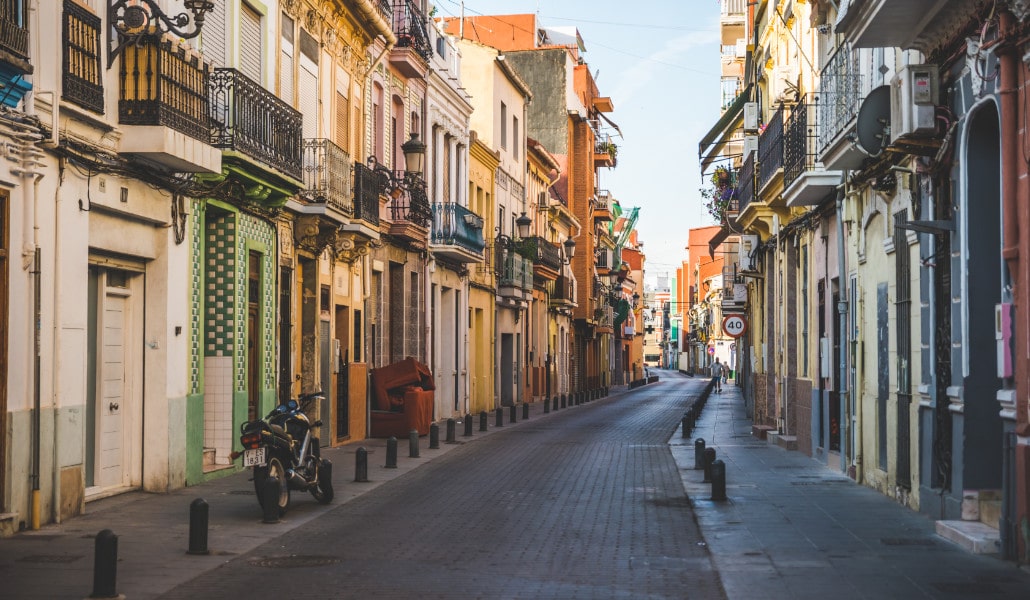
In practice, this tradition is not as deeply rooted in the Valencian capital as it is in other municipalities of the province. It can occur in neighborhoods such as Cabanyal-Canyamelar, the old Campanar or Benimaclet where there are still pedestrian streets that maintain the structure of small buildings in height and first floors.
For mass gatherings between neighbors, Valencia does regulate how they should be held: any popular or recreational activity in public spaces, including neighborhood traditions, clubs or sporting/artistic events, requires express authorization.
This authorization will detail noise limits and schedules, in addition to complying with other regulations.
The case of Cullera: it recognizes this in its mobility ordinance.

Unlike Valencia, Cullera does formally recognize this tradition in its Mobility Ordinance. In Article 8.2, it states that citizens, “following a historical tradition, may occupy part of the sidewalks […] and also part of the roadway […] being able to remain seated on chairs outdoors, as long as circulation is not interfered with […].”
Even pedestrian priority is given to those who are seated, provided that the descent to the roadway does not pose a risk.
Albuixech and Andilla are other municipalities that have expressly regulated this practice in their regulations.