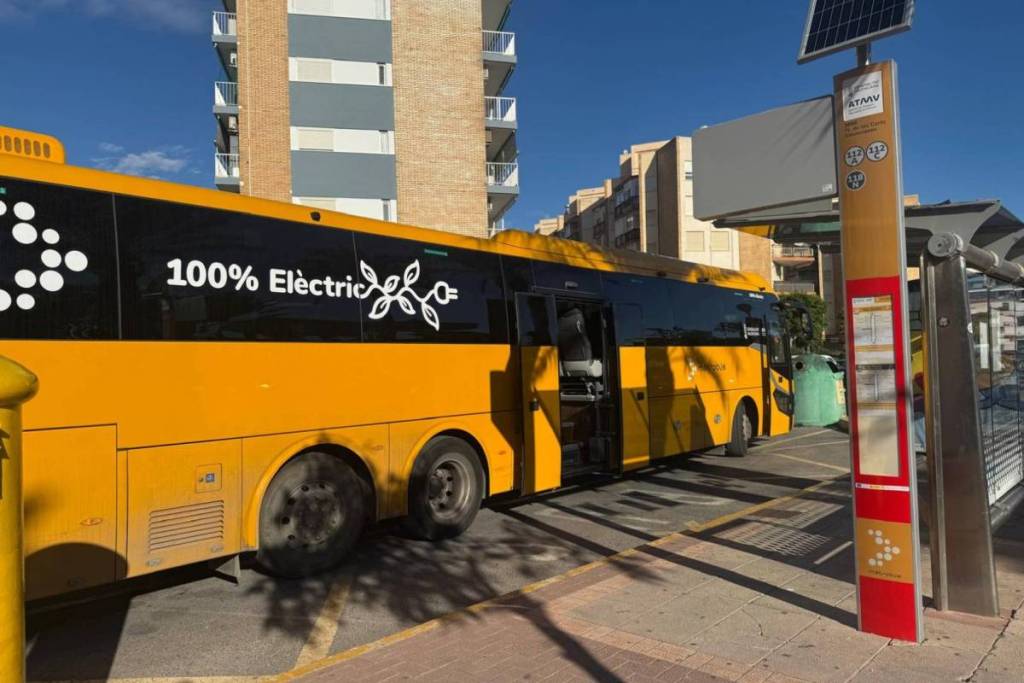

The Valencian Regional Government is launching the Metrobús summer service this Wednesday with 8 lines that will connect various municipalities in the metropolitan area with the beaches along the Valencian coast. The Valencia Metropolitan Transportation Authority (ATMV) is launching the “Vine a la platja amb Metrobús” campaign as an alternative to private vehicles during the summer months.
The coastal destinations served by these lines are Puig Beach, Port Saplaya, the Valencia seafront promenade, El Saler, El Perellonet, Mareny Blau, Canet, and l’Almardà.
According to the ATMV, this initiative has been made possible by the renewal of contracts carried out in recent months, which has allowed for increased service frequencies and the establishment of new connections.
The eight lines and their routes
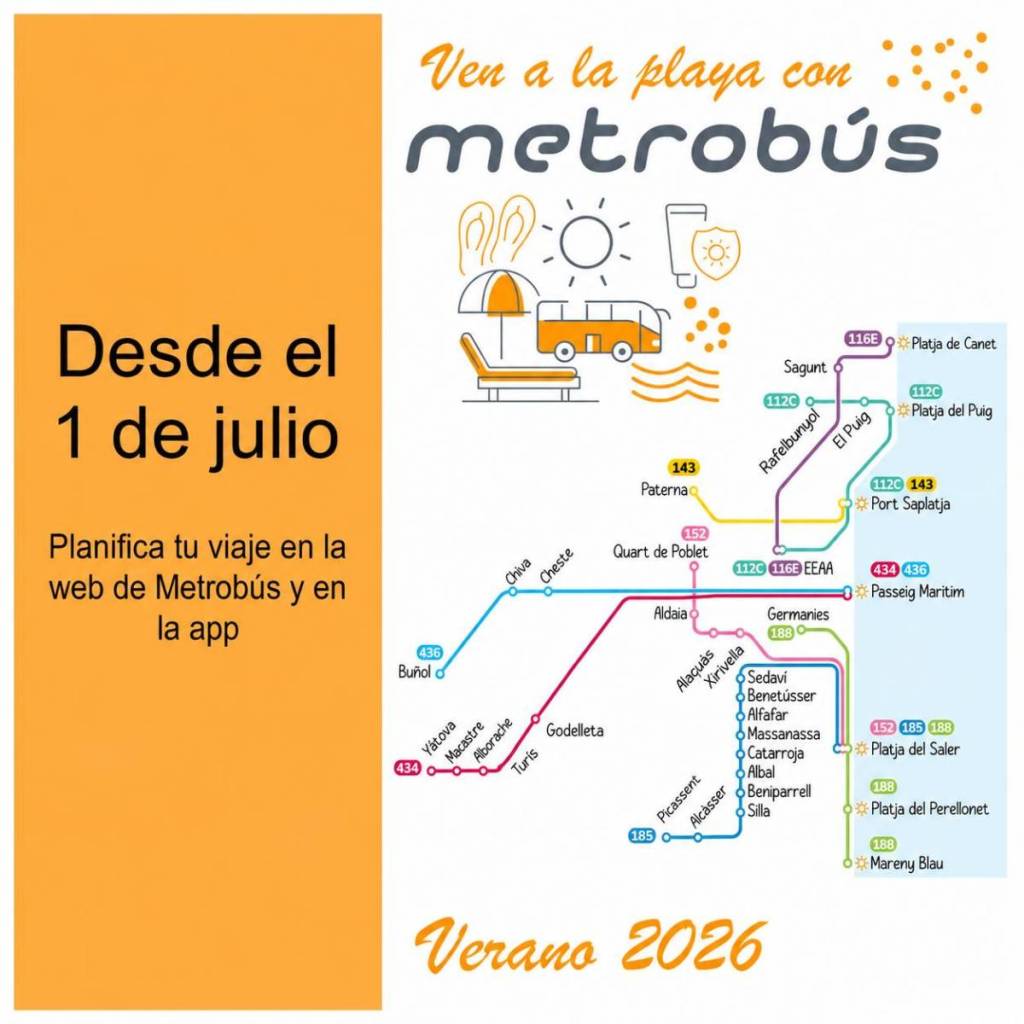
The routes in service are 112C, 116E, 143, 152, 185, 188, 434, and 436, covering a wide range of metropolitan municipalities and inland areas of the province.
This summer, Paterna will debut a direct connection to Port Saplaya via Line 143. That same coastal destination will also be accessible from Rafelbunyol and El Puig via Line 112C, which includes stops at Puig Beach and the Valencia Bus Station. From this same station, Line 116E serves Sagunto, Canet Beach, and l’Almardà.
From inland, Line 152 departs from Quart de Poblet, stopping at Aldaia, Alaquàs, and Xirivella before reaching El Saler Beach. Route 436 connects Buñol, Chiva, and Cheste with Valencia’s seafront promenade, a destination also served by Route 434, which runs through Yátova, Macastre, Alborache, Turís, and Godelleta.
In l’Horta Sud, Line 185 connects Picassent, Alcàsser, Silla, Beniparrell, Albal, Catarroja, Massanassa, Alfafar, Benetússer, and Sedaví with El Saler Beach. Meanwhile, the 188 departs from the Germanies neighborhood in Valencia, stopping at El Saler and El Perellonet before reaching Mareny Blau.
Electric fleet and accessible infrastructure
Several of these services will be provided using the electric buses recently added to the Metrobús fleet. During the current legislative term, the fleet has grown from 116 to 192 vehicles, of which 84% are electric and the remaining 16% are hybrids.
The buses assigned to these routes are Class II vehicles, a type designed for intercity travel in which all passengers travel seated—a feature that is particularly important on longer trips, such as those to the coast.
In terms of accessibility, the bus stops renovated in recent months will incorporate NAVILENS codes, a navigation technology designed specifically for people with visual impairments. The infrastructure also includes bus shelters with screens displaying real-time information on the arrival of each line.