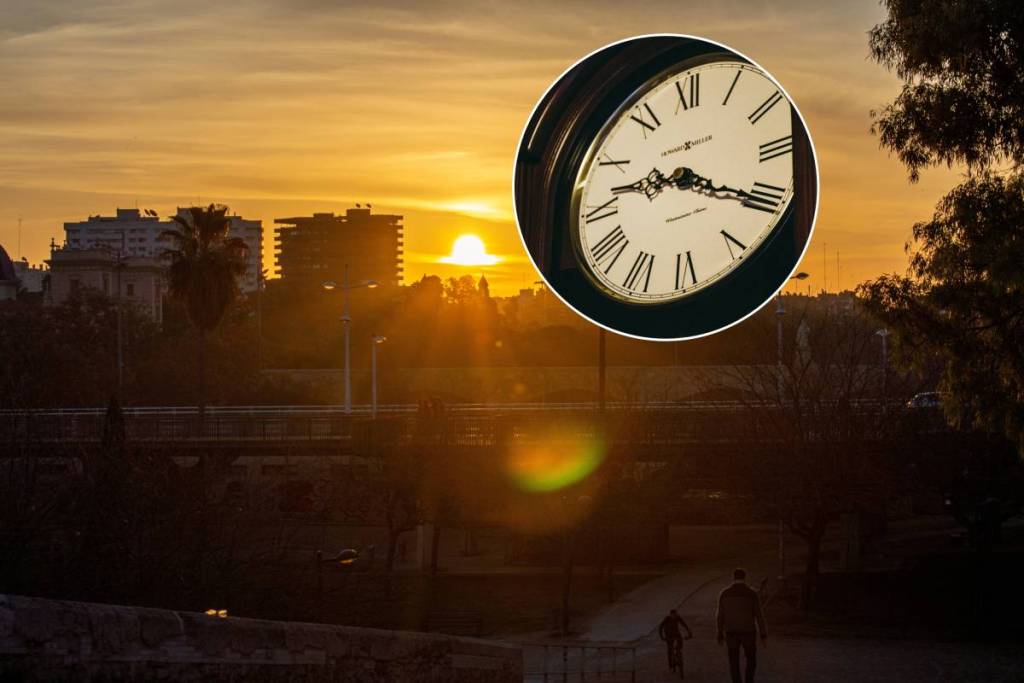

Twice a year, when the European calendar indicates it’s time to change the clock, everyone in Valencia asks the same question: “Do we get to sleep an extra hour or lose an hour?”—a question that has a 50% chance of making our weekend better or worse.
Fortunately, with the switch to standard time, we always come out ahead and get an extra hour of sleep. So, this Sunday, October 25, the night will be longer, and at 3:00 a.m., the clock will go back to 2:00 a.m.
This change, beyond just a one-day rest, will affect daylight hours and the daily routines of most Europeans. Starting Sunday, sunrise will be an hour earlier, making it easier to wake up to natural light, and the sun will set an hour earlier: it will get dark around 6:00 p.m., reducing the time we have to go out for a walk or grab a drink after work (or at least that’s how it will feel).
Why do we change the time?
The debate over whether to keep the time change or switch to a fixed schedule has been going on for years in the European Parliament.
Originally, daylight saving time was implemented to save energy and make the most of sunlight. A model was proposed in which the central idea is to align the hours when most of the population is awake with the hours of natural light, thereby reducing electricity consumption for artificial lighting.
However, according to data and studies from Red Eléctrica, that savings is practically nonexistent these days. It’s estimated that the average electricity savings is around 0.34% and that the economic impact on Spanish households is between 1 and 2 euros per home.
How can we adjust in a healthy way?
Where we really feel the impact is in the change in our routines and how it affects our biological clock. To adapt in a healthy way and adjust our circadian rhythm, experts recommend:
- Adjust your meal schedule. Move up the times for breakfast, lunch, and—most importantly—dinner by the same amount as the time change to help your body adjust. If you can start doing this a couple of days or three before Sunday, you’ll make this transition much easier.
- Say goodbye to electronic devices at night. It’s always a good idea to spend an hour or two without looking at your phone or watching TV before going to sleep, but now you should start that an hour earlier.
- Take advantage of the morning light. Actively seeking out sunlight as soon as you wake up, taking a short walk, or eating breakfast near a window helps your brain adjust to the day’s routine.
- Maintain a healthy lifestyle. It may sound like a cliché, but exercising regularly, maintaining a consistent sleep schedule, cutting back on coffee or energy drinks, and eating a light dinner go a long way toward making these changes easier to handle.