
It’s no secret that the Iberian Peninsula owes a significant portion of its artistic and architectural heritage to the Al-Andalus era. This period left us with magnificent treasures, palaces, and fortresses throughout our country, though if one stands out above the rest, it is the famous Alhambra in Granada.
But Sharq al-Andalus—today’s Levantine coast—was also a strategic and highly significant region during the nearly 800 years of Muslim rule, and today we’re going to tell you about a place they inhabited and where they had a major influence, though not as much as one might think at first glance. We’re talking about the Palace of the Counts of Cervellón, also known as the “Little Alhambra of Valencia.”
In the center of the town of Anna stands a castle that, although its exterior blends the aesthetics of a medieval fortress with those of a Baroque mansion, conceals within its walls all the beauty and color of a Neo-Arabic palace. However, the aesthetic actually varies from room to room: while some rooms feature the Baroque and Neoclassical styles typical of the 18th century, the rooms on the lower floor reveal the building’s origins. It’s a true “matryoshka” of a building when it comes to aesthetics and architecture.
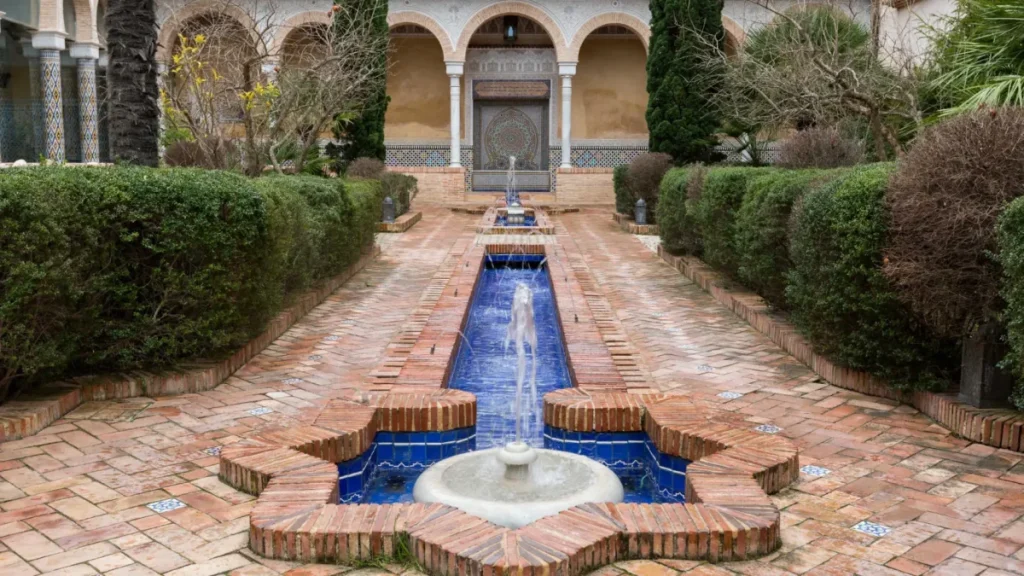
But what truly captivates visitors are two rooms: the Patio de los Surtidores and the Sala Árabe. In the courtyard, you’ll find the classic water channels, surrounded by gardens and vegetation in the purest Generalife style, all decorated with mosaics and vibrant colors that transport you to another era.
The Arab Hall is another aesthetic marvel that showcases the luxury of an Arab palace. The filtered lighting, the details of the alfarje ( a carved wooden ceiling decorated with colorful motifs), and the patterns and colors of the room faithfully recreate how we imagine the life of the Mozarabic nobility. As one would expect, we also find the classic elements present in so many mosques and alcazars, such as arches, tiles, and mosaic-style stained-glass windows; and, as a testament to the perfectionism in the details, reliefs sculpted in white plaster and ivory (plasterwork).
Anna, the capital of water and baked rice
To visit the palace, it’s essential to book in advance; admission costs just 5 euros, and the tour can only be taken with a guide. The tour isn’t very long, so if you decide to visit Anna on a short getaway, we recommend rounding out your trip by visiting one of its famous lakes.
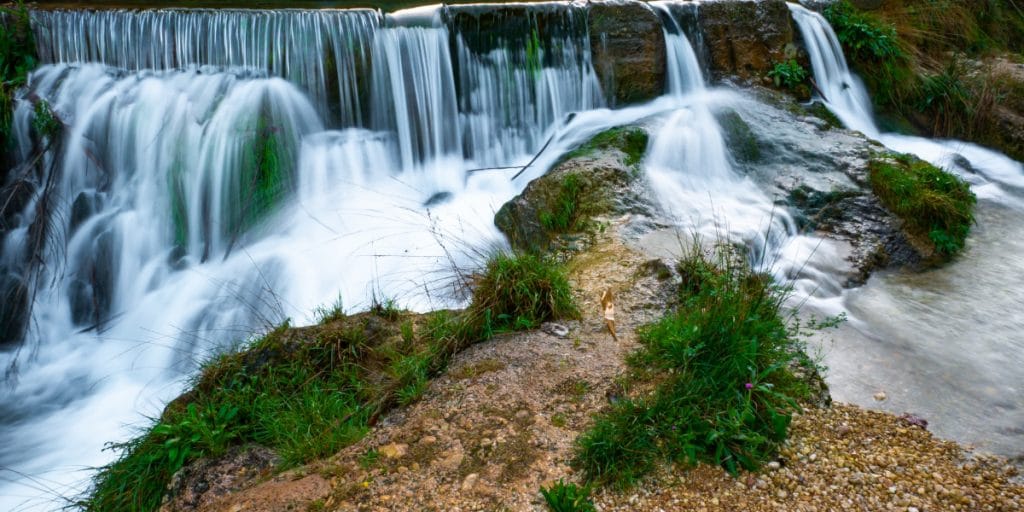
Don’t leave Anna without strolling through its streets and trying its famous baked rice, native to this region and one of the most beloved dishes of Valencian cuisine. But if you want to venture outside the town, you can’t leave without visiting the Albufera de Anna, a huge lake where swimming is allowed and you can go boating, and from there, start the Route of the Three Waterfalls, an easy trail that will take you to discover the four main pools and the three waterfalls that make this town the “capital of water .”