
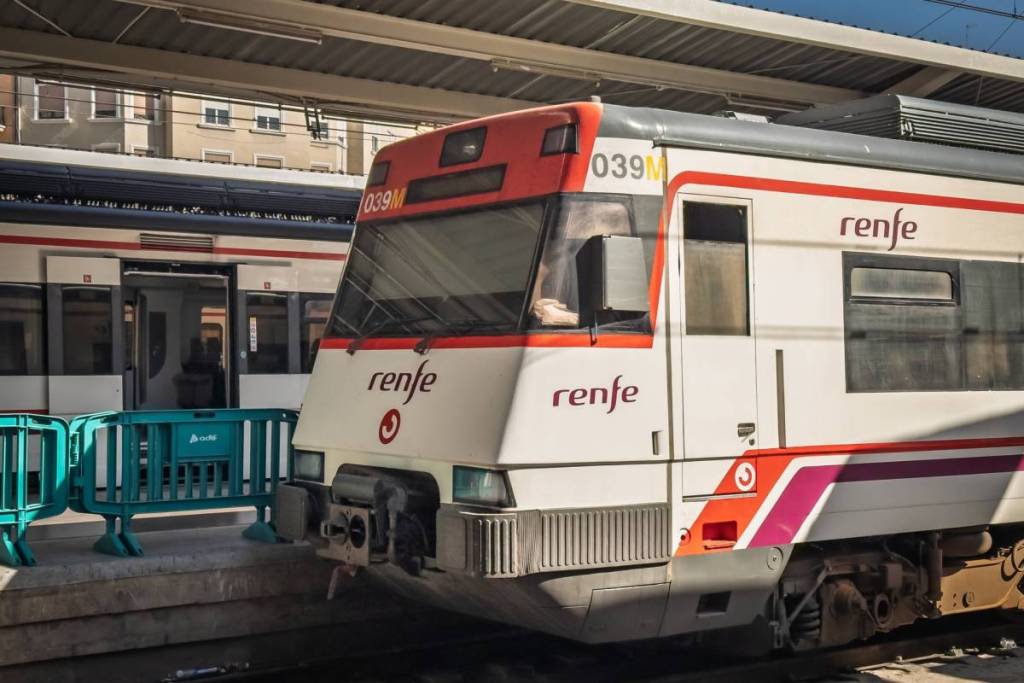

The train drivers’ union is proceeding with the strike scheduled for Thursday, October 29, across all Renfe services. SEMAF (Spanish Union of Train Drivers and Railway Assistants) called for a general strike on October 16 to demand improvements in railway safety.
The train drivers are demanding that the agreements reached with Adif, Renfe, and the authorities be honored regarding the improvement and renewal of safety protocols, the hiring of new train drivers, and the reliability of the infrastructure and rolling stock.
The continuation of the strike was in doubt due to the tragic accident that took place in Toledo (near Urda/Los Yébenes), in which a Renfe AVE train collided with an Iryo train. Ultimately, the union decided to continue the strike, issuing a statement in which it expressed its dismay and remained silent on the accident until all the details of the investigation are known.
Minimum service on commuter, medium-distance, and long-distance trains
The Ministry of Transportation and Sustainable Mobility has established minimum service requirements in response to the train drivers’ 24-hour strike to ensure passenger transportation, but it is highly likely that delays will occur and that trains will be more crowded than usual.
The established minimum services are as follows:
- On the commuter rail network, service levels are set according to different time slots: during peak hours (6:00 a.m. to 9:00 a.m.; 1:30 p.m. to 3:30 p.m.; and 6:30 p.m. to 8:30 p.m.), service is set at 75% of the usual level, and during the rest of the day, at 50% of the usual level.
- On medium-distance trains, an average of 65% of regular services are operating.
- On high-speed and long-distance trains, service is operating at 73% of normal levels.
- For freight service, 26% of the scheduled service will operate.
