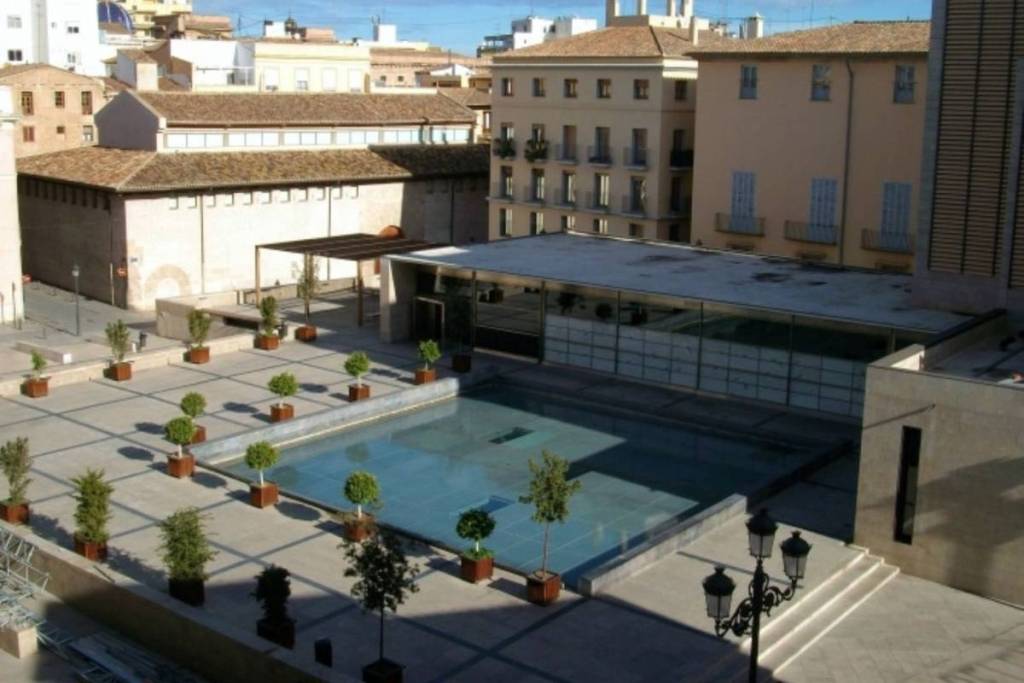

Hidden beneath the streets of Valencia’s most central neighborhoods lie the vestiges and traces of what the city was like centuries ago. But among all the remnants of our past, there is one place that is particularly significant for what it represents: the Almoina archaeological site and museum.
This site, located next to Valencia Cathedral, houses what is believed to be the city’s founding well (that is, where the first Roman settlement was located in the 2nd century B.C.) and a large number of ruins dating back to the Mozarabic period (some 1,400 years later).
A museum essential for understanding Valencia’s history, it will remain closed until at least October 2027. The city government announced this week the immediate closure of the archaeological center to waterproof and climate-control the space and protect the artifacts.
This comprehensive renovation aims to preserve the skylight that allowed visitors to view the ruins from the outside, while addressing the problem of leaks at the joints of the glass panels. These leaks were damaging both the museum itself and the ruins housed within it. In addition, the renovation will be used as an opportunity to upgrade the lighting and install a giant screen at the entrance.
Although there is no specific date for the reopening, it is estimated that the work will take about 14 months and the investment will total 1,723,777.99 euros.