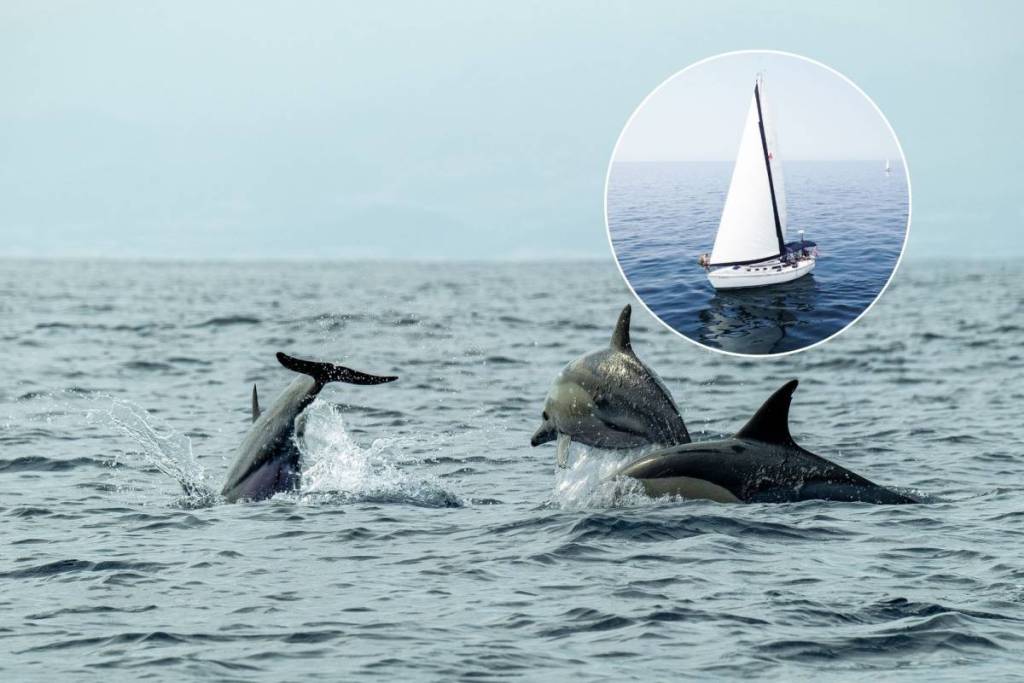

The Valencian Regional Government has confirmed the recurring presence of six species of cetaceans in the waters of the Valencian Community over the past two years.
The bottlenose dolphin tops the records as the most common and abundant cetacean in this stretch of the Mediterranean, followed by the fin whale in second place in terms of the number of sightings.
Sperm whales, Cuvier’s beaked whales , long-finned pilot whales , and common dolphins also roam these waters, though their presence is more occasional or sporadic.
A wildlife map that, far from being merely scientific, finds its most vivid expression in the excursions that each season take hundreds of people to encounter these animals off the coast of Alicante.
Alicante, the epicenter of whale sightings
From a geographical standpoint, the province of Alicante accounts for the highest number of sightings over the past decade. The Regional Ministry of the Environment notes that this distribution may be influenced by the greater presence of observers in the area, but the data speak for themselves: between late summer and early fall, groups of between 50 and 80 individuals have been documented in the Torrevieja area.
It is along this same southern coastline that companies like Blue Odyssey operate out of the Marina de las Dunas Marina in Guardamar del Segura, offering three-hour excursions aboard the Charrán, a semi-rigid boat that allows them to cover distances quickly in search of bottlenose dolphins.
The company estimates the probability of a sighting at around 90% and offers a ticket with no expiration date in the event that the animals are not spotted—a guarantee that reflects both its confidence in the data and its accumulated knowledge of the species’ movements in the area.
Further north, between Dénia and Cape San Antonio
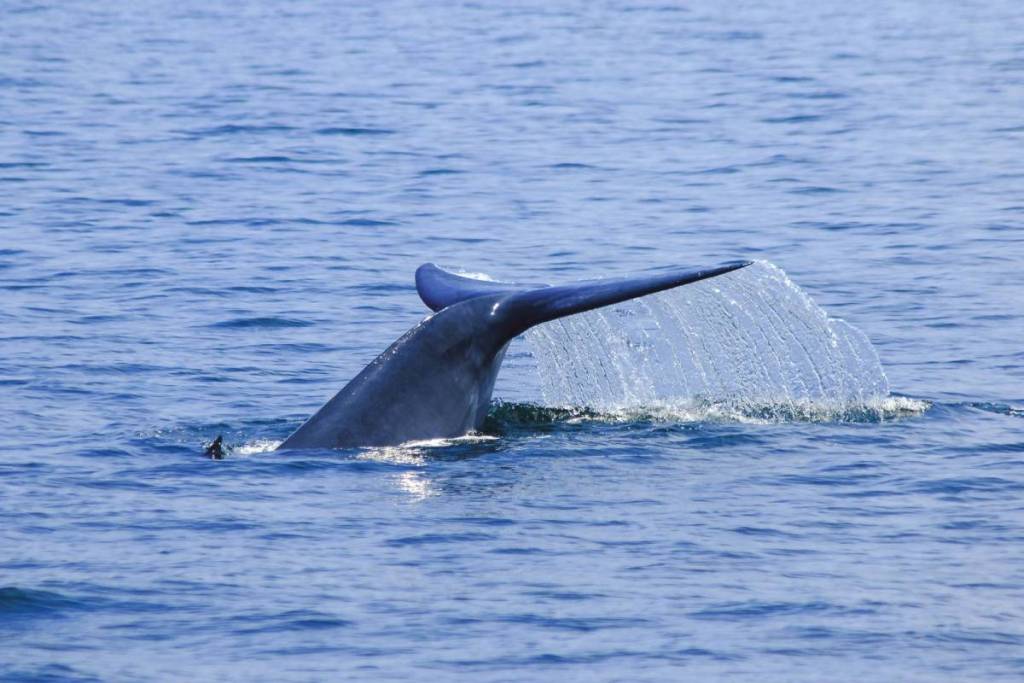
The fin whale, whose presence is consistent with a summer migration route according to data from the Generalitat, has one of its best-documented migration corridors in the waters off Dénia. WeWhale organizes four-hour excursions from Marina El Portet aboard the Som Mar, a 100% electric sailboat whose silent propulsion minimizes interference with marine wildlife.
The use of a hydrophone allows participants to hear cetaceans underwater when the distance permits, a sensory dimension that transforms the observation experience.
Groups are limited to a maximum of ten people, and the company allocates 7.5% of its net revenue to conservation projects through the WeWhale Association, its sister organization.
The Science Beyond the Horizon
Monitoring of these populations relies on a network of diverse sources: the Generalitat’s Marine Surveillance Service, the MysticMed scientific project—focused on the protection of the fin whale—and observations provided by local authorities, the Civil Guard, universities, and fishing vessels.
In 2025, the Castellón fleet joined this collective effort, incorporating sightings made in open waters east of the continental slope—areas that are typically under-sampled—during bluefin tuna transport operations.
The slow pace of navigation characteristic of these operations facilitates the detection of cetaceans, making fishermen privileged observers in areas where science has not yet reached
The absence of regular aerial and maritime censuses during 2024 and 2025, however, limits the ability to compare current data with historical series and makes it difficult to analyze population trends over time.