


History has not always treated women and their legacy in the world fairly. In Valencia, there is a figure unknown to many, yet one who was of enormous importance to the city’s development during the Roman era: Viria Acté.
The Valencia City Council has announced that it will name a street in the city after her. The new street will be located in Extramurs, in the El Botànic neighborhood, specifically between Lepanto Street and Rojas Clemente Square. This street has existed since late July of this year and was created to eliminate the urban bottleneck in this area, but until now it had no name.
Recommended Articles
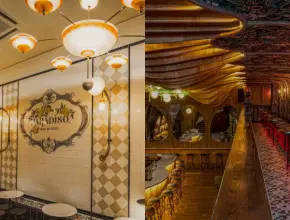 Valencia’s new “horchata shop” where they don’t serve horchata: it hides one of the world’s best speakeasies
 Valencia Now Has a Date for the Christmas Tree Lighting Ceremony: Traffic Closures and Bus Detours Through January 6 Due to Holiday Events
Viria Acté is considered the first illustrious Valencian woman in history and a benefactor of ancient Valentia. Her remarkable biography, the restoration of the Temple of Mars (her greatest contribution to the city), and the exceptional recognition she received in her time make her one of the most important figures in the history of Valencia.
From slave to having a statue in the Roman Forum
Although nearly 2,000 years have passed since her birth, much is known about Valentia in the 1st and 2nd centuries and about Viria’s life. There are no historical records regarding her origins, but her Greek nickname (Acté) was common among slaves, leading historians to believe that she was born a slave and later gained her freedom.
She lived during one of the city’s most glorious periods, under the Flavian and Antonine dynasties, and although it was customary at the time for women to remain confined to the domestic sphere, Viria became a successful businesswoman with great social influence.
She ran one of the city’s most important sculpture and monument workshops, and some researchers suggest that she also diversified her wealth into other businesses. Her marriage to Lucio Antonio Crescente, a member of an influential family, helped her establish connections with the aristocracy.
But her greatest contribution was financing, together with her husband, the reconstruction of the public temple dedicated to Mars Augustus (the god of war) in the forum, which had suffered extensive damage, likely following a flood. This act of generosity granted her the highest social status and earned her the privilege of having a statue in the Roman forum—a space reserved almost exclusively for the emperor, the gods, and the great patricians.
Furthermore, she is the person from ancient Valentia with the most honorary dedications: one from her own freedmen (former slaves), one dedicated by Fabia Grattia Maximilla, one sponsored by Gaius Atilius Severus, and a fourth of unknown origin.
Her archaeological legacy in today’s Valencia
Most of what we know about Viria is due to the work of the philologist and epigraphist Josep Corell (among other authorities), although we can also trace her archaeological presence at various points throughout the city:
- In the Cathedral, at the base of one of the columns next to the Puerta de los Hierros, a Roman stone block bearing her inscription is preserved.
- At the Museum of Fine Arts, visitors can see two original inscriptions on pedestals dedicated to her.
- At the Museo de l’Almoina (currently undergoing renovations), a marble sculpture of a woman was found—decapitated and with her breasts mutilated—attributed to her workshop.
